


Overview
My project focused on understanding how communication organizes itself within an informal online community.
Using Discord interaction data, I explored who the most active users were, how users clustered around shared interests, and whether the network showed evidence of a core-periphery structure.
The Goal
Online communities generate large amounts of interaction data, but communication patterns are often difficult to interpret without structural analysis. This project examined:
-
Which users were most central to communication
-
How user interests and demographic related to interaction patterns
-
Whether communication was evenly distributed or concentrated among a smaller core group
-
How tenure and activity influenced network position.
Research & Insights
My research identified that communication was driven by a smaller set of highly concentrated users.
01
Core-periphery structure
The server showed a clear core of active users with a larger, less concentrated periphery.
02
Tenure matters
Longer-tenured users were generally more central in the network.
03
Shared interests
Some homophily appeared around interests such as gaming and social interaction.
Design Process
I followed a structured analytical process to build, analyze, and visualize the network.
01
Collect
Gathered survey data, user attributes, and full message history of the server.
02
Analyze
Utilized manual and AI analysis of research findings to create an attributes and edge list.
03
Visualize
Created visualizations to highlight activity, interests, and network structure.
Final Outcomes


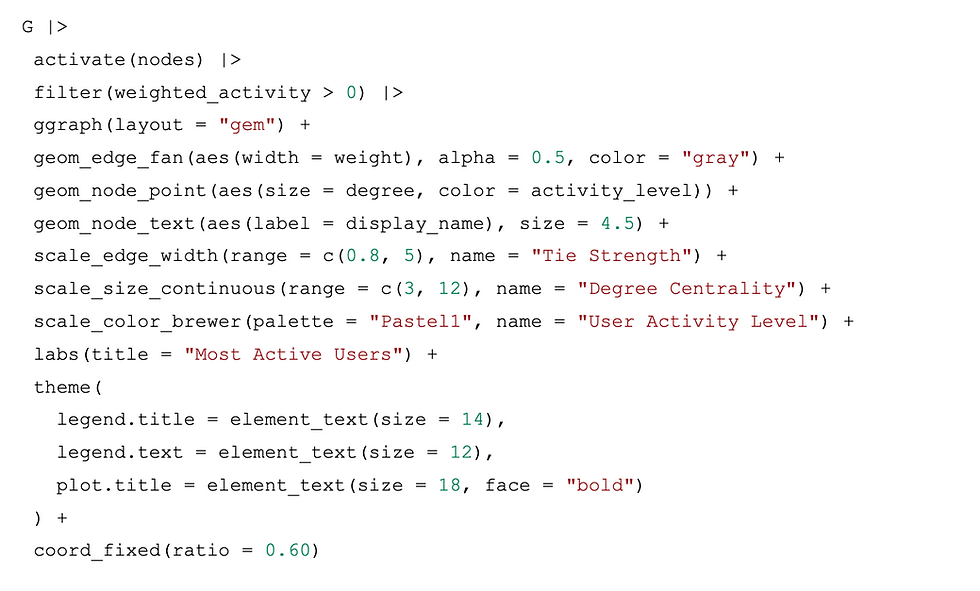


Final Visualization Code
This project required me to create visualizations using the language R in Visual Studio Code 2.